
How To Repurpose Your Old Content Into Blog Posts
My partner asked me to take some photos of our HVAC system the other day while he was at work.
Like sure, how hard can it be????
But then these were the instructions he sent me:
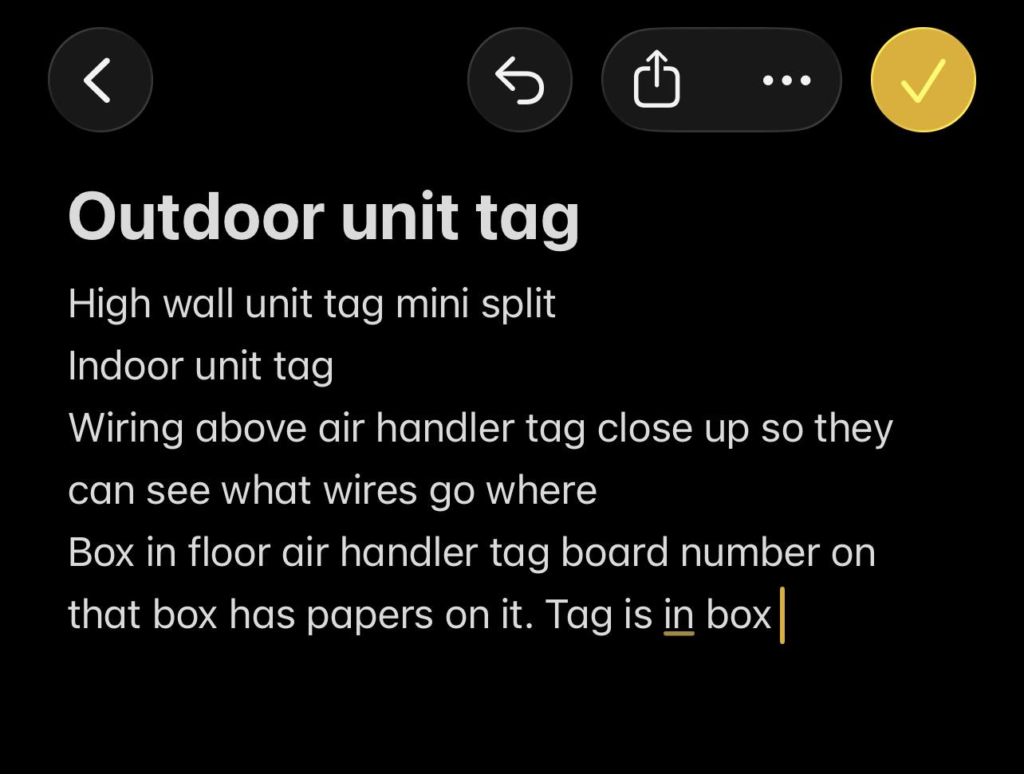
I basically immediately started panic-sweating as I stared at the screenshot of gibberish.
I’m a big girl. And I consider myself to be pretty smart. But HVAC systems are NOT my thing, and trying to parse through his instructions on my own felt way overwhelming, so…
I made him call me on his lunch break and talk me through every single step and photo I needed to take.
If I had to, I’m confident I could have figured it out on my own. But it probably would have taken way more time and back-and-forth photo sending until I got it right.
Sometimes, you just want someone else to walk you through something. You don’t want to have to learn the hard way.
You want the information spoonfed to you, like I wanted my boyfriend to spoonfeed me the exact photos he needed taken of our HVAC system.
So consider this my lunch break phone call to you.
How to Repurpose Your Content Into Blogs
One of the best ways to start blogging (or stay consistent) is by reusing the ideas you’ve already come up with – in social media posts, for Reels, your podcast episodes, the newsletters you send to your email list, etc.
But I realize I haven’t really given you a step-by-step on HOW to actually do this, so me saying “repurpose your shortform content into blogs” might feel a lot like reading that screenshot of HVAC gibberish my man sent me.
So, here’s the spoonfed version of how to repurpose your existing content into blog posts:
1️⃣ Keep track of the content you’re publishing
This is step 1 because if you’re not keeping track, you have no way of easily knowing what performed well or what people in your audience want to know more about.
If ya don’t have a tracking system already, open up your favorite project management tool (I use Notion) and start tracking whenever a piece of content gets really good engagement or people reply with more questions about it.
These are usually prime repurposing topics because you have proof your audience cares about them or has more questions you can answer.
2️⃣ Repurpose on purpose
Heh, see what I did there?
The goal isn’t “repurpose content” — it’s repurpose this specific piece because it funnels people to your freebie, it targets a keyword you want to rank for, or it supports one of your offers.
So, decide what you really want your blog to achieve for you right now.
→ Is it getting more organic traffic? Then focus on content that already has a strong SEO keyword you can target.
→ Is it getting more people on your email list? Then repurpose content that relates to your freebie (but doesn’t completely solve their problem – the freebie should be the next step so they actually download).
→ Is it selling your offer? Then repurpose topics that specifically tie into the problem your offer solves and the transformation your clients get.
Basically, get clear on your selection criteria and stick to them (this is something I work through with you if you book The Repurposing Audit).
3️⃣ Rework, don’t just recycle
The number 1 thing I want you to keep in mind when turning anything into a blog post is this:
‼️ YOU NEED TO MAKE IT READ LIKE A BLOG POST ‼️
This isn’t about copying and pasting, hitting “publish,” and calling it a day.
That isn’t gonna do anything (except maybe actually hurt your website’s SEO and reputation with Google).
Here’s what “making it read like a blog post” looks like:
Say you repurpose an Instagram carousel about “3 reasons you need a brand voice guide.” On Instagram, you probably kept each slide punchy.
For a blog post, those slides become your structure. But now you’re adding the why behind the why – the story of the client who didn’t have one and how it negatively impacted them, the example of what “off-brand” actually means, the explanation and context you cut because it wouldn’t fit.
Think about someone clicking to your post from Google – what additional context would be beneficial to them? How can you structure the content (using subheaders, internal links, and images) to be more valuable? Has your opinion changed on anything, and what new angles could you explore that you didn’t in the original?
Do that, and your readers won’t notice that the idea isn’t new (and if they do, they won’t care bc it’ll feel fresh).
Need More Spoonfeeding? 🥄
TL;DR: More thought goes into effective repurposing than a lot of business owners realize, and if you don’t wanna figure it out on your own, you can get 10 blog topics spoonfed to you with The Repurposing Audit.
You’ll get 10 blog topics developed from your existing content (with potential angles + the why behind them), a custom Notion Repurposing Scorecard you can keep using after the audit, and a Loom recording with tips for executing the blog topics after you receive them.